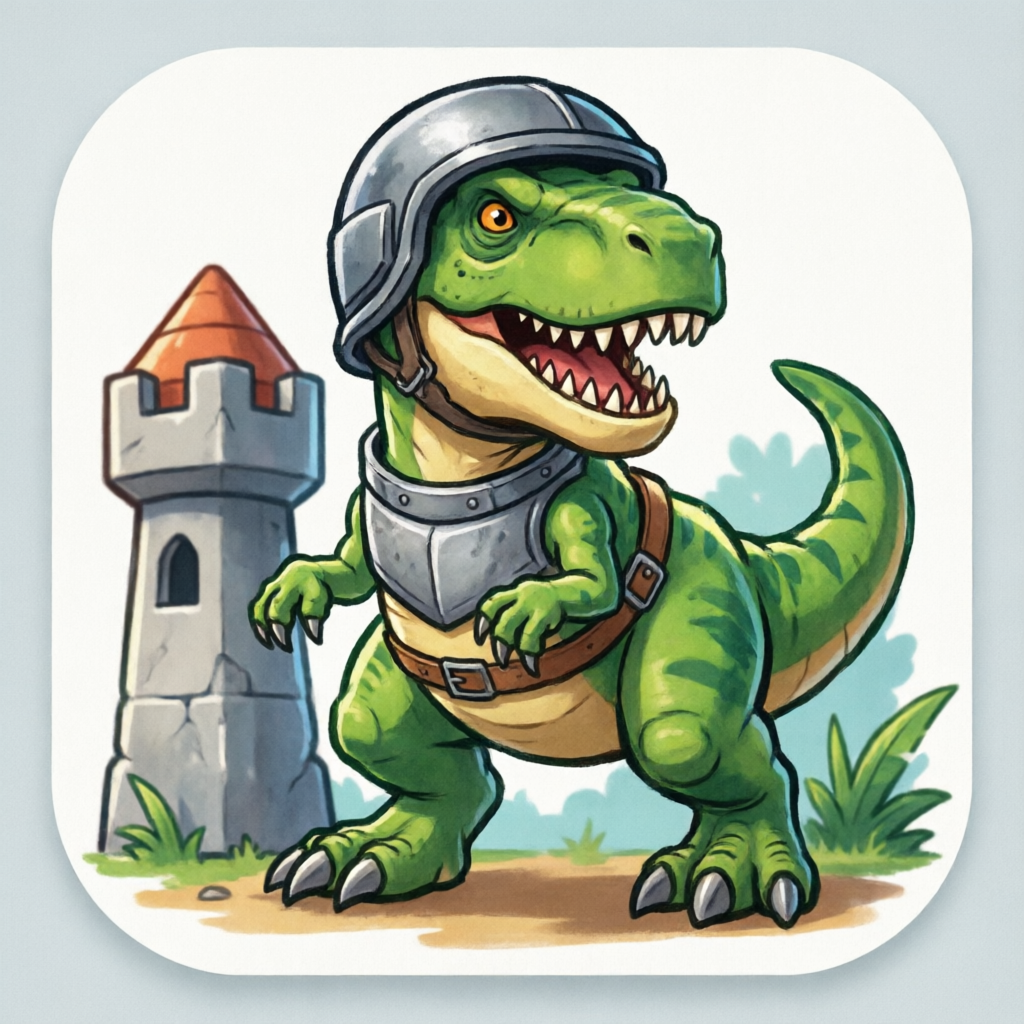
Build a Dino Defense Playing Guide: Controls, Deck Merges, and Strategies
Master card merges, summoning timing, and battle controls in this complete guide to build a dino defense playing setup that crushes enemy hordes.
Mastering the mechanics of mobile tower defense requires quick reflexes, smart hand-eye coordination, and tactical foresight. When you decide to build a dino defense playing session, understanding your interface controls and merge speeds is what separates an early wipeout from an endless win streak. Learning how to build a dino defense playing strategy lets you optimize every tap, summon powerhouse reptiles at critical chokepoints, and conquer relentless enemy waves without breaking a sweat.
Whether you are placing sturdy frontline blockers or micro-managing deck merges between cooldowns, fluid control execution is essential. Mobile strategy titles blend card collection with real-time lane defense, demanding both strategic foresight and mechanical efficiency from players. This comprehensive guide breaks down the core controls, deck-building frameworks, merge mechanics, and advanced combat tactics needed to dominate the battlefield.
Understanding the Core Control Layout and Touch Mechanics
Executing precise inputs under pressure forms the bedrock of every successful defense run. In strategy merge defense games, your screen is divided into distinct functional zones: the deployment lane, the card hand dock, and the emergency ability bar. Knowing how each zone behaves prevents accidental placements and misdirected attacks.
Touch sensitivity and dragging precision play vital roles when swiping cards onto the board. Rather than frantically tapping, clean drag-and-drop actions ensure your dinosaurs land directly on targeted tiles. If you misplace a tank by even one grid square, enemy runners might bypass your line entirely and rush your base core.
| Control Area | Primary Input | In-Game Action | Pro Execution Tip |
|---|---|---|---|
| Summon Dock | Drag & Drop / Tap | Spawns unit onto active lane | Queue your summon right before energy fills |
| Deck Reserve | Double Tap / Drag | Combines identical unit tiers | Keep duplicates adjacent for faster finger sweeps |
| Tactical Skills | Single Tap & Target | Fires high-damage field spells | Reserve for clustered secondary waves |
| Lane Selector | Swipe Left/Right | Shifts tactical camera focus | Monitor enemy spawn portals early to react |
| Speed Toggle | Single Tap (1x/2x) | Controls match pacing | Drop back to 1x during sudden elite boss surges |
Developers frequently update UI responsiveness to prevent common mobile headaches, such as lower panel lockups or laggy drag registers. Players tracking mobile strategy titles on the Google Play Store will recognize how crucial patch updates—such as bug fixes for bottom command panels and power displays—are for maintaining competitive control fluidness during high-stakes wave encounters.
The Deck-Building Framework: Merging for Maximum Power
Raw tapping speed means very little if your card deck lacks synergy. A balanced squad must contain a healthy ratio of resilient frontline defenders, rapid-fire ranged damage dealers, crowd controllers, and high-impact aerial or splash units.
When you sit down to build a dino defense playing roster, the merge mechanic serves as your primary mid-match scaling engine. By collecting duplicates and fusing matching cards during downtime, you transform basic hatchlings into apex predators capable of holding back massive swarms.
[Basic Deck Composition: 2x Tanks | 2x Single DPS | 1x Area Splash | 1x Stun/Slower]
To optimize your deck economy, balance your energy-generation cards against your high-cost heavy hitters. Relying exclusively on expensive apex carnivores leads to energy starvation during the opening seconds of a round. Conversely, relying only on cheap swarms leaves you underpowered against armored mid-game bosses.
| Unit Class | Ideal Deck Slot Count | Primary Battlefield Function | Synergistic Dinosaur Example |
|---|---|---|---|
| Frontline Vanguard | 2 Cards | Absorbs direct damage; anchors line | Ankylosaurus / Triceratops |
| Ranged Striker | 2 Cards | Consistent single-target DPS | Dilophosaurus / Velociraptor |
| Siege / Splash | 1 Card | Annihilates tightly packed swarms | Spinosaurus / Brachiosaurus |
| Crowd Control | 1 Card | Slows, freezes, or stuns elites | Pterodactyl / Parasaurolophus |
Lane Positioning and Summoning Timing
Effective board positioning dictates how smoothly your defensive perimeter holds. Placing an offensive unit without frontline protection wastes summon resources, as fast melee enemies can shred unshielded ranged attackers before they wind up their attacks.
Establish your defense depth by anchoring tanks 2–3 tiles behind the enemy entrance spawn marker. This spacing forces opposing forces to bunch together, maximizing the splash damage dealt by your rear-guard artillery.
| Deployment Phase | Optimal Grid Placement | Priority Actions | Common Mistake to Avoid |
|---|---|---|---|
| Early Wave (1–5) | Center-Lane Midground | Deploy 1 cheap tank + 1 ranged DPS | Summoning high-cost apex units too early |
| Mid Wave (6–12) | Flanks & Chokepoints | Merge duplicates; activate first crowd controller | Cluttering the board with unmerged Level 1s |
| Boss Wave (13+) | Direct Line of Travel | Layer slow traps; summon single-target boss slayers | Wasting active area spells on lone boss targets |
Maintaining situational awareness requires watching the upcoming wave telegraph at the top of the interface. When an armored wave is incoming, hold your active summons until you can deploy armor-piercing dinosaurs right at the entrance choke.
Step-by-Step Guide to Executing Fast In-Game Merges
Fast, accurate merging under pressure is what elevates casual gameplay into mastery. Hesitating for two seconds over your dock can cost you an entire lane. Follow this structured routine to ensure seamless card handling during intense defense sequences.
- Scan Incoming Archetypes: Read the wave preview to identify whether aerial, swarm, or armored units are appearing next.
- Bank Energy Reserves: Avoid spending your summon resources down to zero; always maintain a 20% resource buffer for emergency counters.
- Execute the Horizontal Merge Swipe: Keep matching cards adjacent on your dock. Use a swift single-thumb swipe to combine duplicates into higher tiers.
- Deploy to Targeted Grids: Drop the newly upgraded unit directly behind your vanguard shield line to immediately boost effective DPS.
- Trigger Cooldown Resets: Time your summons immediately after active skill casts to chain burst damage seamlessly.
Practicing this loop develops muscle memory. As match tempo quickens, you will automatically manage your hand without diverting your visual focus from advancing enemy waves.
Upgrades, Meta Progression, and Stat Scaling
Victory in progressive defense games relies heavily on persistent progression outside of matches. Player experience and community reports consistently highlight that raw skill plateaus if card levels and passive talent trees fall behind the enemy curve.
Allocate your quest rewards and gold toward universal damage and health multipliers first, rather than over-investing in a single niche summon. A broad, stable roster handles unpredictable wave compositions far better than one over-leveled unit supported by weaklings.
| Progression Asset | Resource Investment Priority | Impact on Combat Pacing | Long-term Strategic Value |
|---|---|---|---|
| Tank Card Levels | High (Primary) | Extends lane hold time directly | Essential for enduring late-game bosses |
| Ranged DPS Cards | High (Primary) | Decreases time-to-kill on swarms | Prevents board congestion and lag |
| Summon Energy Regen | Very High | Accelerates tactical summon frequency | Allows rapid recovery after board wipes |
| Crowd Control Duration | Moderate | Enhances window for splash strikes | Highly effective against charging elites |
| Player Base Health | Low (Secondary) | Provides cushion for leaked runners | Useful safety net, but prevention is better |
Reinvesting match rewards into your core five-card roster builds a dependable team capable of tackling higher difficulty tiers. Regularly clear daily quests and challenge modes to maintain a steady flow of duplicate cards, which are vital for fueling your ongoing merge engine.
Advanced Tactics to Build a Dino Defense Playing Style
To conquer endless challenge modes, players must refine their playstyle beyond basic deck merging. Experimenting with specialized summon timings and counter-mechanics unlocks higher survivability rates against punishing elite waves.
Wave Stalling Techniques
Instead of eliminating enemies instantly at the spawn boundary, pull aggressive melee attackers toward your mid-field. Stalling enemies directly in front of your strongest defensive structures gives your long-range snipers extra time to chip away at incoming health pools.
Staggered Energy Deployment
Dumping your entire energy reserve in a single burst leaves you completely vulnerable to surprise secondary waves. By staggering your unit calls every 3 to 5 seconds, you maintain a continuous stream of reinforcements that smoothly absorbs unexpected burst damage.
Emergency Control Resets
When an elite boss slips past your frontline, do not panic-summon low-tier ranged units in its path. Instead, drop a high-durability tank directly onto the boss's hitbox while triggering a crowd-control spell. This freezes the target in place, allowing your backline turrets to refocus fire and finish it off before it breaches your perimeter.
Frequently Asked Questions
What is the most common control mistake when trying to build a dino defense playing deck?
The most frequent mistake is frantic, inaccurate screen tapping. Players often misplace units into incorrect lanes or accidentally trigger ultimate cooldowns during minor waves. Focusing on clean, deliberate drag-and-drop inputs yields far better defensive consistency.
How often should I merge duplicate cards during active combat?
Merge duplicates whenever there is a natural pause between enemy waves or while your frontline tank is safely holding the current group. Avoid merging during an active elite breach, as fusing two units temporarily reduces your total number of active targets on the board.
Can I clear late-game waves without high-tier apex dinosaurs?
Yes. Effective crowd control, optimal lane placement, and disciplined deck merging often outperform raw, uncoordinated power. A well-placed team of mid-tier dinosaurs with high attack speed and stun synergy can defeat waves that would overwhelm poorly managed legendary units.
How do game updates affect control responsiveness?
Patch updates often address bottom-panel UI freezes, fix power-scaling displays, and optimize touch-input hitboxes. Keeping your game updated ensures that summon commands, drag gestures, and emergency skill buttons register accurately during high-intensity combat waves.
Related Guides
Build a Dino Defense Gameplay: Mastering Controls, Card Merging, and Wave Survival
Master build a dino defense gameplay with our comprehensive guide to touch controls, card merge strategies, deck setups, and endless wave survival.
Build a Dino Defense How to Play: Complete Beginner's Guide & Controls
Master the battlefield with our build a dino defense how to play guide. Learn core touch controls, merge mechanics, deck building, and battle tactics.
How to Build a Dino Defense Join Battles and Master Lane Controls
Learn how to build a dino defense, join competitive battles, and master summon controls, card merging, and deck setups in Dinosaur Defense.
How to Build a Dino Defense Start: Complete Beginner Survival Guide
Learn how to build a dino defense start in dinosaur survival games. Master controls, early builds, defense mechanics, and beginner combat tips.